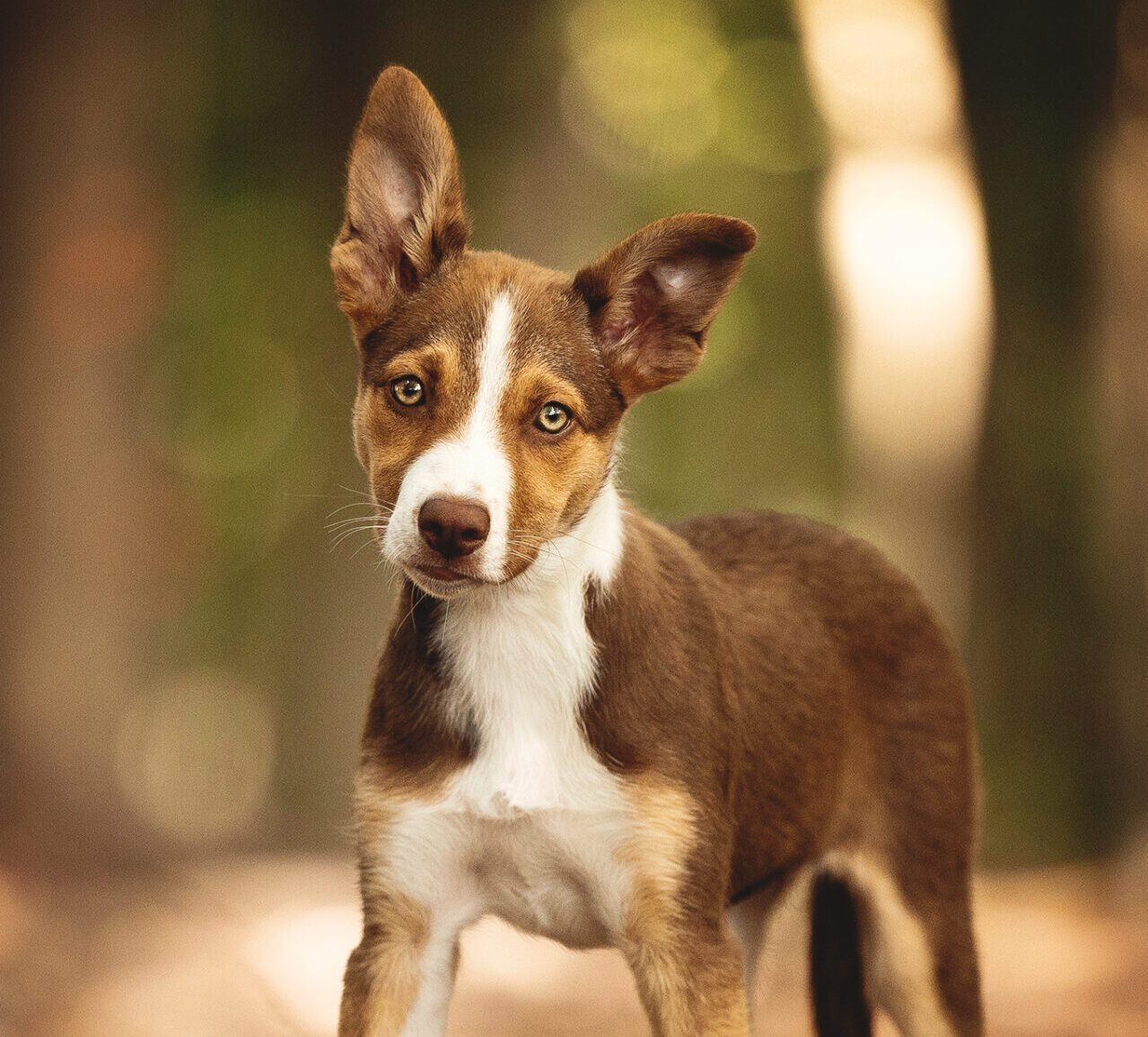
The common opinion used to be: “Wait until your puppy is a year old before you start training.” This view was based on the assumption that younger dogs were not yet mature enough for structured learning.
Today, however, we have gained a deeper understanding of canine development. We now know: the learning process begins the moment your four-legged friend enters our lives, whether we are aware of it or not. Every interaction, every new experience shapes the personality and behavior of our new family member.
Imagine your puppy as a small, curious explorer. Its brain is like a sponge that eagerly soaks up and processes every experience. From the gentle sound of your voice to the rustling of the treat bag to happy play in the garden: all these moments are valuable learning opportunities that lay the foundation for a harmonious relationship between you and your dog.
Get to know your puppy properly. Find out what your new companion likes and what it doesn't. That way you can bring fun into every exercise and work on small insecurities early on.
Make learning the highlight of the day. Discover the joy of learning together with your puppy! Whether in the living room or in the park, playful learning can happen anywhere. That way, every walk becomes a little adventure.
Use your puppy's “superpower”. In the first few months, your puppy learns particularly quickly. Use this time to collect great experiences and lay important foundations!
Build an inseparable friendship. Now is the perfect time to build a strong bond. Show your puppy that you are the coolest person in the world and will always be there for it. I show you how to build this connection in very small steps in The One-Minute Revolution.
Your puppy is like a little superhero in training: its bones and joints still need some time to become really strong. That's why we take it slowly and only increase training when your dog is ready for it. At around one year of age, it is a good idea to have your dog's joints X-rayed. The vet gives us the green light for the next training phase!
Training is like cooking: it's all about the right mix! Too much action could harm your puppy's development, but it needs a certain amount of load for its bones and joints to develop. The challenge is to find the perfect balance so that your dog grows up healthy and happy. You can find more about balance in training here.
That's why, in the Basics for Sport Dogs course, I start with the foundations in a completely relaxed way, without agility obstacles. Later, when your dog is older, we can really get going. Thanks to the basics your dog has learned, training will then be super effective and a lot of fun for you and your dog!
We start with the fundamental elements, the foundation for successful communication between you and your dog. This phase is about developing a common language and discovering the world from your puppy's perspective. Training on the agility obstacles is introduced at a later stage, once your dog has internalized the necessary foundations and is physically ready for it. A good example is the focus cue: you can teach it without any obstacles, and later it is the foundation for distance work.
Why are these basics so crucial for further training success?
That way, you can teach the agility obstacles quickly later on, once your dog is old enough for them.
The following fundamental skills are essential building blocks for your dog's future agility training. Think of them as a versatile toolbox you can draw on when you train more advanced exercises later. The more tools you have in your repertoire, the more efficiently you can work.
Before you introduce your dog to agility obstacles, it should master these:
You will have lots of fun training these foundations in the first few months with your new family member! The “Basics for Sport Dogs” course is like a common thread and gives you lots of age-appropriate exercise ideas.
Remember: this is only a guideline for the earliest point at which I would start with each obstacle. Every dog is unique and learns at its own pace. This order has worked well for me, but feel free to adapt it to your dog.
And don't forget the most important thing: always have fun training with your puppy!
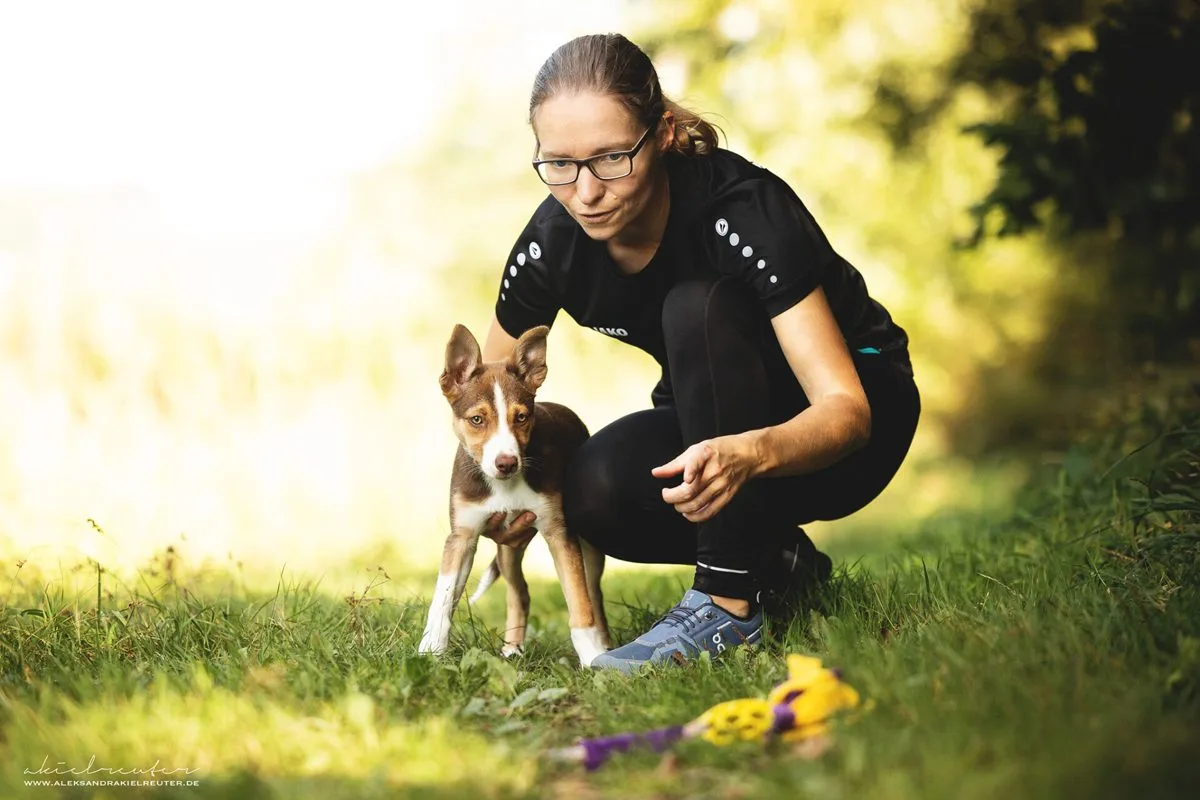
I have been running agility for 23 years and have been passing on my knowledge to other teams for 16 years. I studied psychology and e-learning, which is why my articles don't just explain what, but also why.
More about me →In the course library you will find the right training plan step by step, with video instructions and real corrections.