Half-tight, controlled turns that keep the flow going and spare your hard turns.
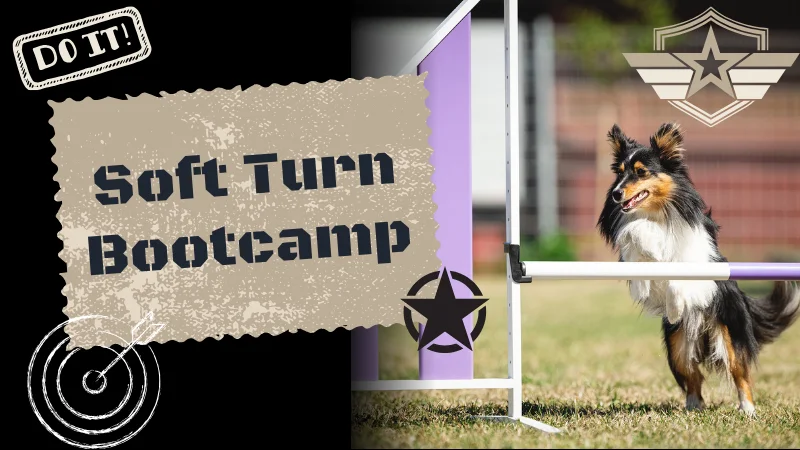
A soft turn is a half-tight, controlled turn. Your dog stays in the flow and gets past temptations cleanly. Soft turns don't replace your hard turns, they spare them: you don't have to use your hard turn cue for every turn, so it doesn't get watered down. And soft turns protect the joints long-term.
Step by step, you'll build that understanding and solidify it in different exercises. Your dog learns to work the turn independently in both directions, even at a distance.
You decide whether to build the soft turns handler-based or direction-based. The course supports both paths. At the end, you'll test them under realistic conditions on course.
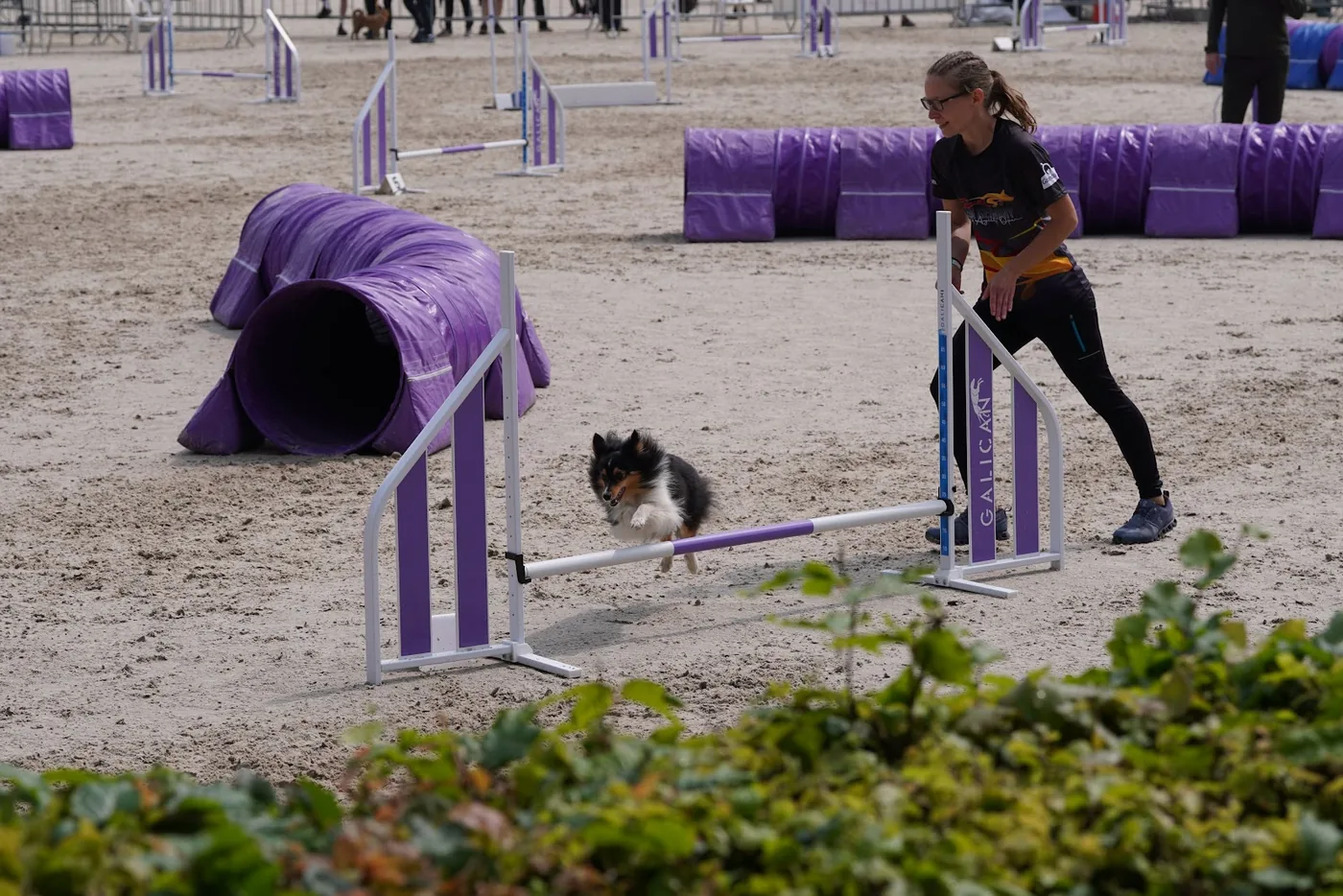
Vorher und nachher
6 modules from build-up through testing to short courses. You can build it handler-based or direction-based, both are shown.
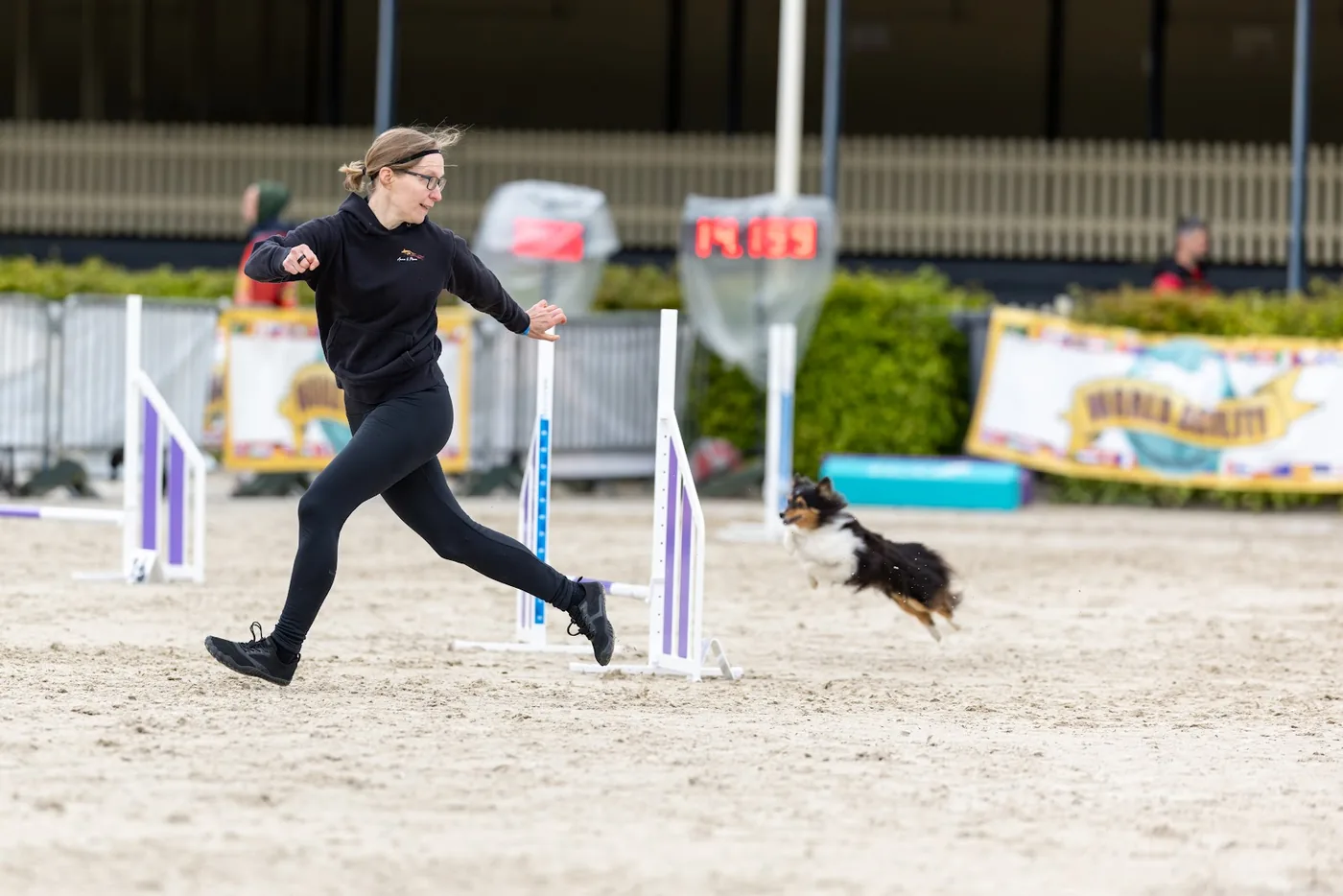

A handler-based and a direction-based system are both shown.
If your dog is very small and already turns very tight on its own, you probably don't need soft turns.

Kundenstimme

Spar-Tipp
Save with the Smart Jump Skills Bundle: five jump cue courses in one package.
/en/kurse/smart-jump-skills-bundle
-
The Soft Turn Bootcamp was a game changer for us! I had struggled with situations where I couldn’t use my tight turn cues but was too far away to guide the turn through my physical handling alone. My dog often had to correct her direction after already jumping, and I didn’t like what that meant for either our agility flow or the physical strain on her body.
Now we have a broader common language, and I have a way to communicate the direction to her even when I’m late or positioned far away. This has resulted in better lines, better jumping technique, fewer bars, and a feeling that we can tackle trickier sequences.
I like that the course offers both a directional-based and a handler-based system, so everyone can teach these skills to their dogs, regardless of their background. The steps are well explained and broken down into small enough pieces which allowed my dog to understand the criteria well from the beginning on.

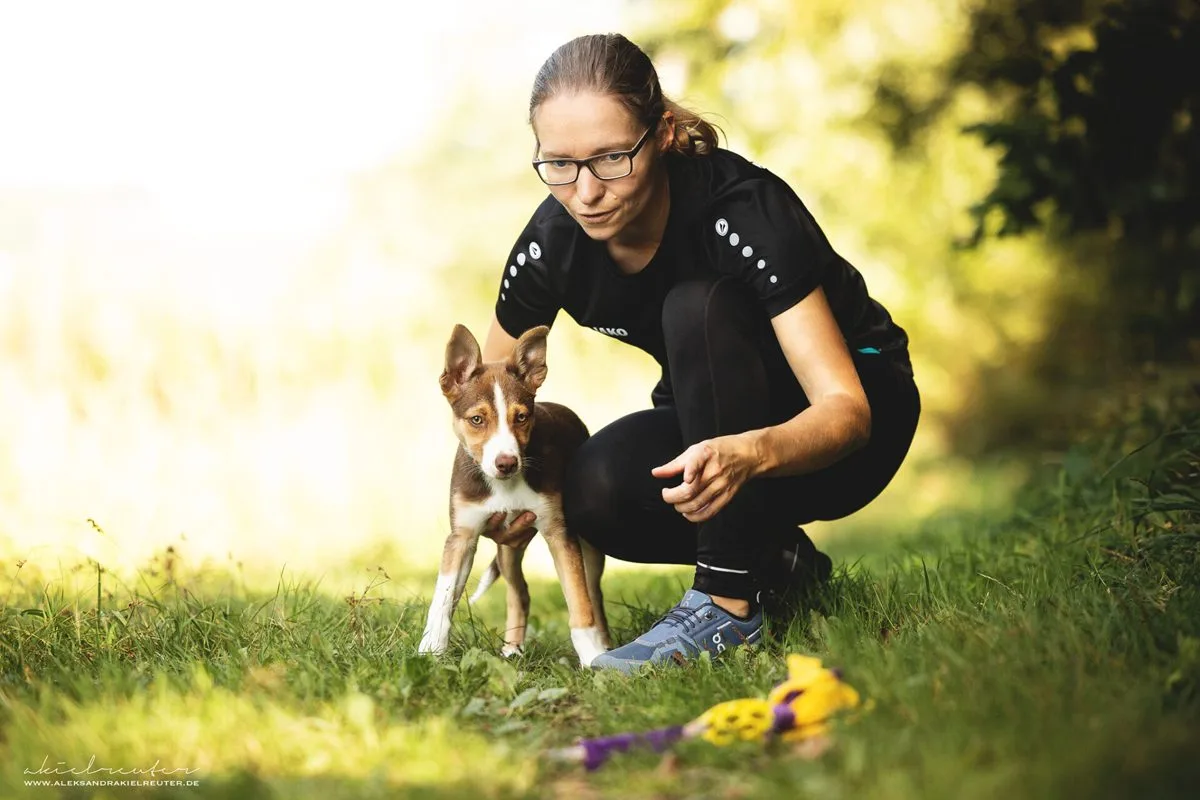
I have been doing agility for 23 years and have won 13 medals at the World Agility Open and the European Open. Agility Campus has been around for 10 years. In my courses your dog learns to understand what it is doing. Repetition alone is not enough for me.
More about me →
You start right away and train for twelve months at your own pace.
Still not sure? Find out which course is right for you and your dog on Start here →
Right after your purchase. Your login details come by email.
12 months to all content.
Yes, the course is included in the community.
Go to the community →2 jumps and a bit of space are enough for most of the course.
On a hard turn your dog takes off close to the bar, lands close behind it and wraps the wing completely. On a soft turn it takes off neither far away nor very close, but somewhere in between, and lands already facing the next line. That in-between range comes up a lot on competition courses. With its own cue for it, you don't have to use your hard turn cue for everything, so it stays clean.
Hard turns first. You build them with Skill Building: Left & Right, then the soft turns come next.
They're a good idea for all large dogs, and also for small and medium dogs that tend to turn wide. Soft turns save the joints, so I recommend them for most dogs.
That's up to you. I show both in the course, so you can use the system that fits you and your dog.