You hear this resolution a lot. What people tend to forget is how many things actually go well and how much they have learned from their dog.
My first agility dog was an Elo. This unrecognized mix of Old English Sheepdog, Eurasier and Chow Chow is certainly not one of the predestined agility breeds. When it’s too warm, the Elo likes to wait in the shade under the A-frame. It doesn’t like to be rushed and is calmness itself. But precisely through these traits I learned an incredible amount about the balance between building drive and impulse control, even if a certain amount of frustration came along with the career.
Was everything different with the next dog? Of course not. What worked well with the Elo simply didn’t work the same way with the Border Collie. We have to adapt to every new breed and every new dog individually. There are no one-size-fits-all solutions.
It is more important to reflect on your own experiences and question why a training approach worked with a certain type of dog, or why it didn’t. And not to be afraid to deviate from the instructions.
Time and again I see handlers wanting to do everything better with their new dog than with the previous one. Understandable. But if you want to do “everything better”, you quickly focus too much on the areas that weren’t perfect with the previous dog. If we had a dog that didn’t want to play, we now pay special attention to building drive. If the previous dog had a start line problem, the new one should have very good impulse control.
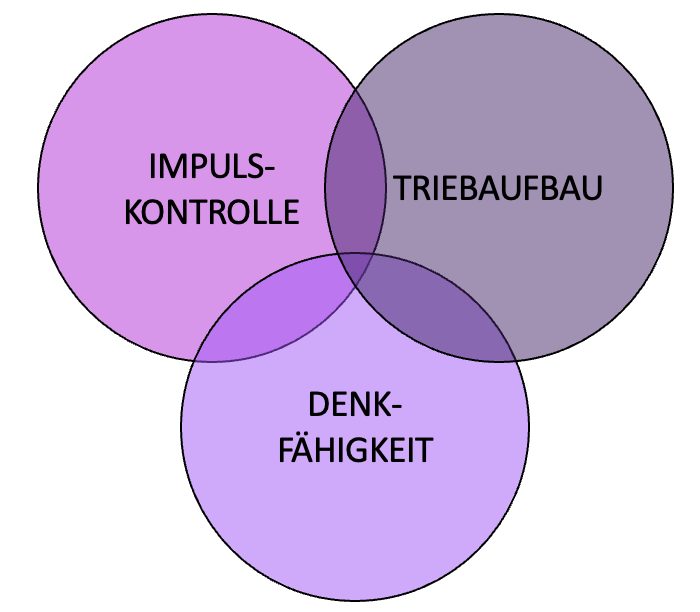
It is exactly this extreme focus that becomes the problem. That’s why I keep three elements in balance in my training.
Already at puppy age, I teach three basic pillars: building drive, impulse control and thinking skills. The training of older dogs can be divided up this way too. An agility dog should be developed in each of these areas, and the balance between them is what really counts.
Building drive is about reinforcing innate drives. Often this means the play drive, so tug games. We can just as well build drive for a “dead prey”: a static toy that is laid out. For me, drive for food also falls into this area. Not every dog likes to work for food, but that can be learned too. This includes drive towards a static food reward: a food machine, a food dummy or a food ball.
Who needs it? Everyone. A dog with a lot of drive for toys doesn’t automatically have drive for a static food reward. And some food-crazy dogs that love the food machine don’t care much for a toy. Since I want to be able to reward flexibly, I want my dog to feel different rewards as rewarding, not just accept them.
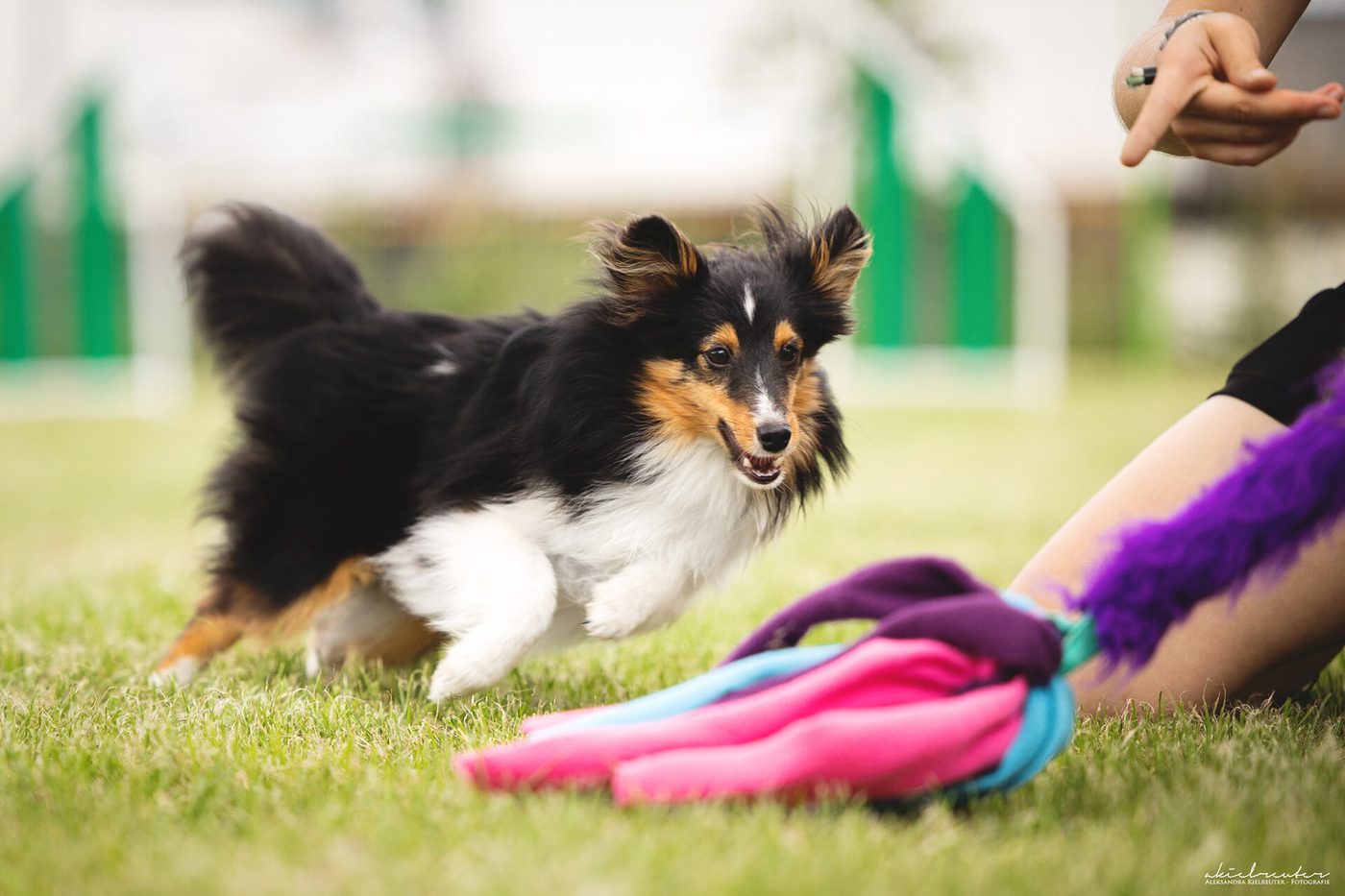
Impulse control is the ability to control oneself. A dog that sits nicely while the bowl is placed in front of it is controlling its impulses. It would much rather pounce on the food, but it has learned that waiting pays off more.
In agility, impulse control is needed at the start jump and on the contacts. Most dogs would like to start earlier or not wait until the seesaw touches the ground. Running Contacts are an exception, surely one reason why so many people like them. And to even get to a competition in Germany, you need the companion dog test.
Who needs it? Everyone, again. Very active dogs with a strong play or hunting drive need more practice than calmer ones. But the relaxed type benefits too: these dogs are often unsure when an action is expected at all. Through a targeted release of the control positions, we make it clear to these dogs when we want an action.
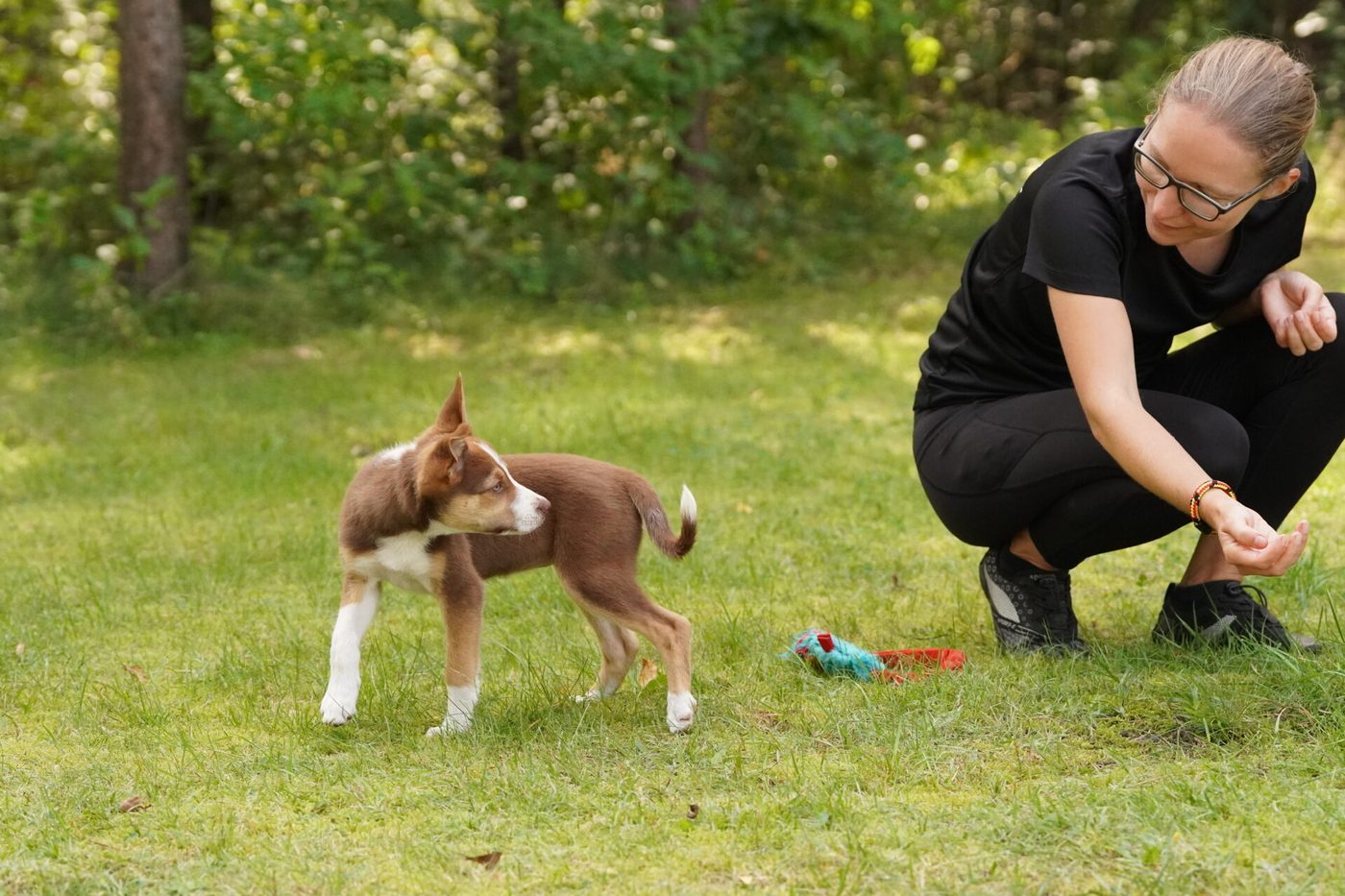
By the third pillar, I mean the dog’s cooperation in figuring out exercises and its response to cues. Your dog should understand that our cues have a meaning, but also know when its own ideas are welcome. That is the case with shaping, and I introduce a separate cue for it. This way your dog learns when trying things out is appropriate and when it should only perform what it has learned.
Who needs it? This one depends on you. If you are athletic yourself and can run a lot, you don’t have to train your dog as far as someone who can help less with body language. In general, it pays off for anyone who wants to train their dog as well as possible.
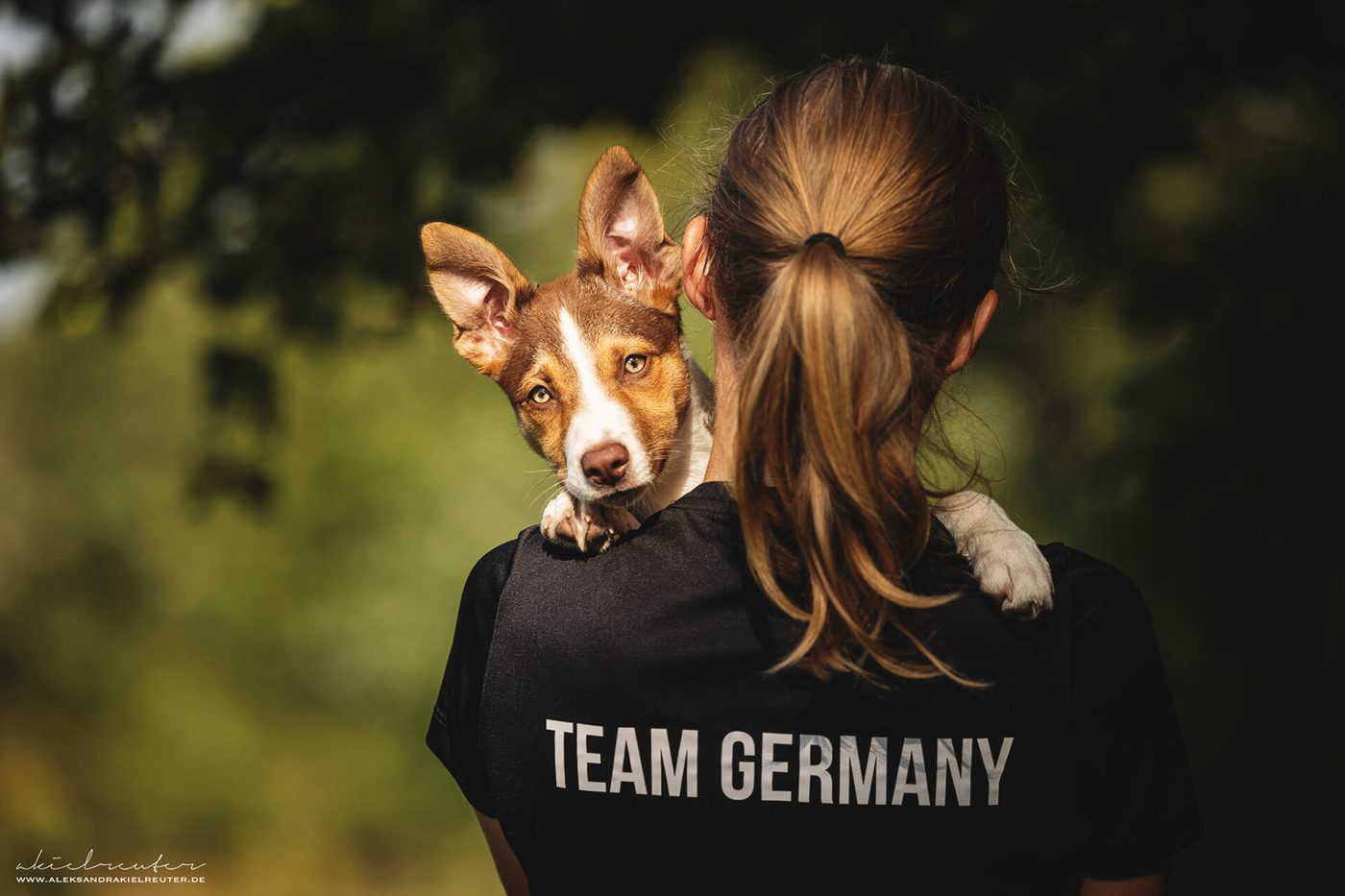
The key to good foundation training is the balance between the three areas. If one is missing, it shows in the performance. All three influence each other and overlap in many exercises. Let’s look at a simple stay exercise. Every wait in sit, down or stand requires elements of all three:
The more drive a dog brings along or develops, the more impulse control it has to learn: building drive makes the stimuli more and more attractive, so the dog has to control itself all the more. Better thinking skills increase confidence and engagement in training. It becomes easier for the dog to make the right decisions and show impulse control. Better impulse control in turn lets more drive build up, and the drive itself increases.
If only one area is developed, an imbalance arises.
A dog that is only developed in drive, but doesn’t learn to control its impulses and work together with its human, quickly becomes overwhelmed. Focusing on you is hard for it, and it is easily distracted by other dogs or outside stimuli. And waiting is hard for it.
If mainly impulse control is developed, the dog tends towards passivity. Maybe that’s what you want for a couch potato, but not so much in sport. These dogs don’t dare to do anything without asking first. Such dogs work less independently, are insecure, and have to be accompanied on the course and guided in small steps. This usually comes at the expense of motivation and speed.
Lots of thinking exercises without impulse control lead to a dog that thinks too much and no longer gets running. It has too many options in its head, knows many cues and becomes “stuck in its head” as a result. It would rather run slower so that no mistake happens.
What counts is a balanced mix. Especially for puppies and young dogs, there are many ways to develop these areas without any physically demanding exercises. If you lay good foundations here, you will have a much easier time later when it comes to contacts or cue discrimination.
In the course “Basics for Sport Dogs”, these three topics are taught together with many other skills: the foundation for all dogs that will later be trained in different sports.
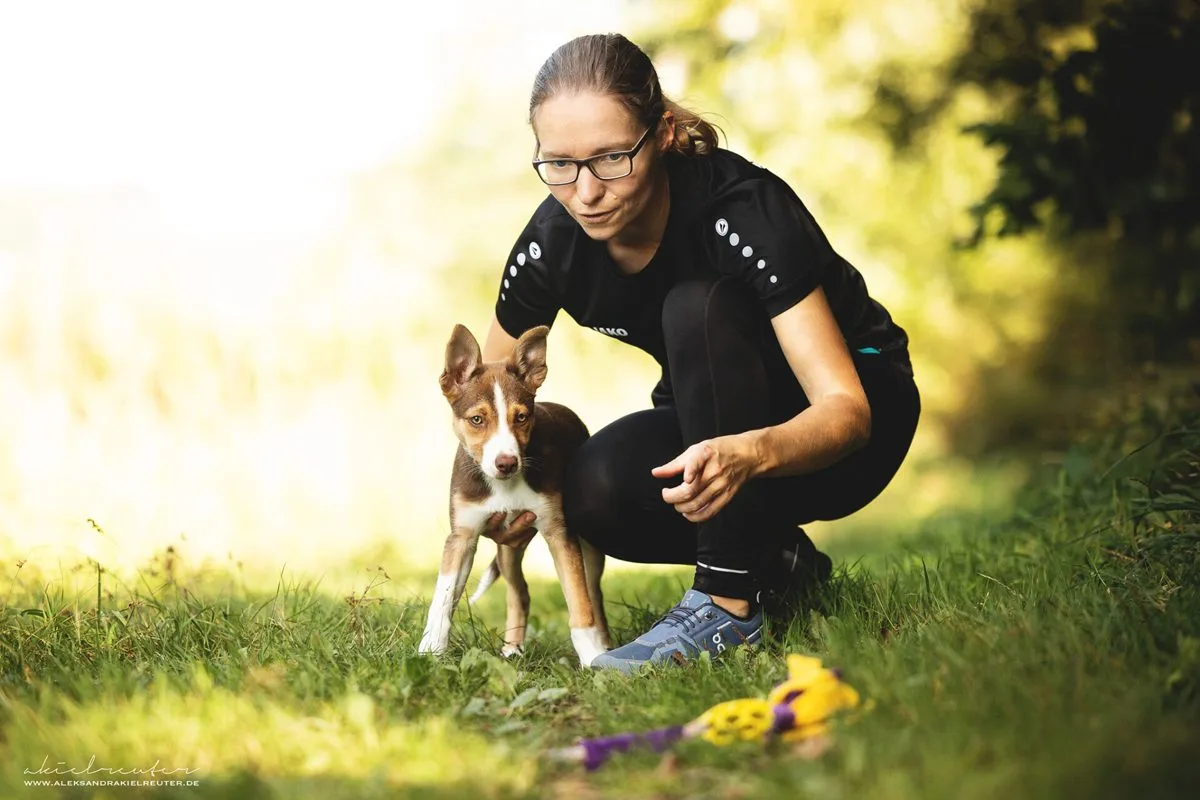
I have been running agility for 23 years and have been passing on my knowledge to other teams for 16 years. I studied psychology and e-learning, which is why my articles don't just explain what, but also why.
More about me →In the course library you will find the right training plan step by step, with video instructions and real corrections.