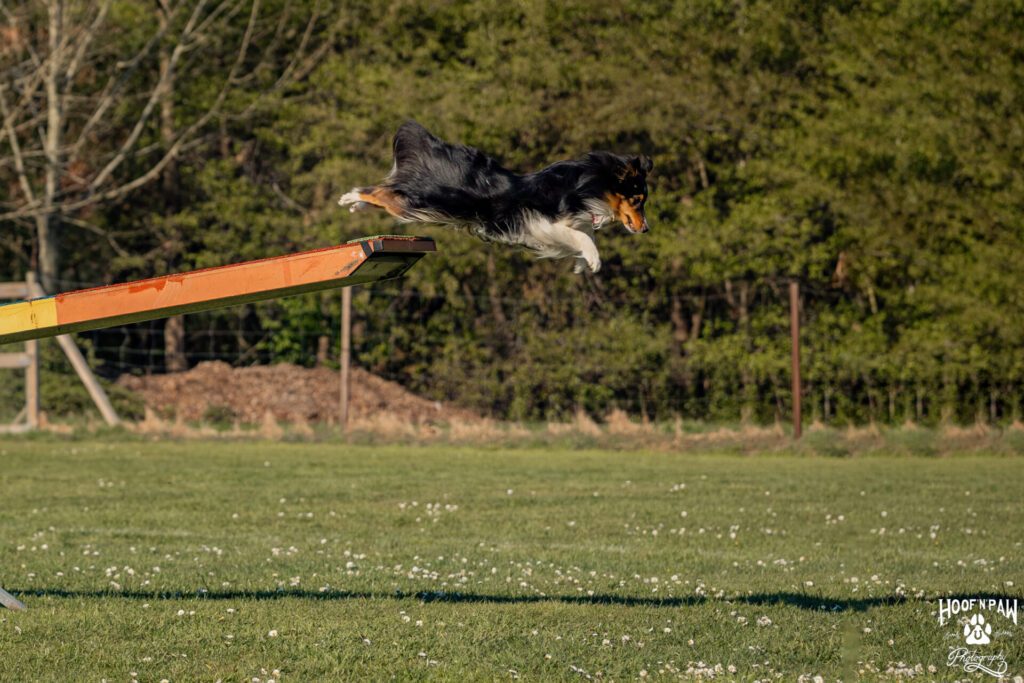
This is about the most common mistakes in seesaw training and how to avoid them. The insights come from years of experience in my online courses and live training sessions.
For each mistake, we'll look at what it does to your training and what helps instead.
Your dog is lured onto the seesaw with a treat. It steps on. And suddenly the board moves underneath it.
That can be really scary. Imagine stepping on something and it tips away under you. Exactly. And a moment like that leaves an impression.
On the next attempt, your dog thinks: “Um, no thanks.” This insecurity isn't easy to overcome. On top of that, your dog never knows when and how the board will move. That only makes it worse.
Instead of luring, we shape. Your dog learns to understand every small step, and most importantly: It is in control of the board's movement. “I can move that thing!” That builds its confidence and makes it an active teammate instead of a passenger.
Your dog also sets the pace. No pressure, no stress. We reward active choices instead of overcoming fear.
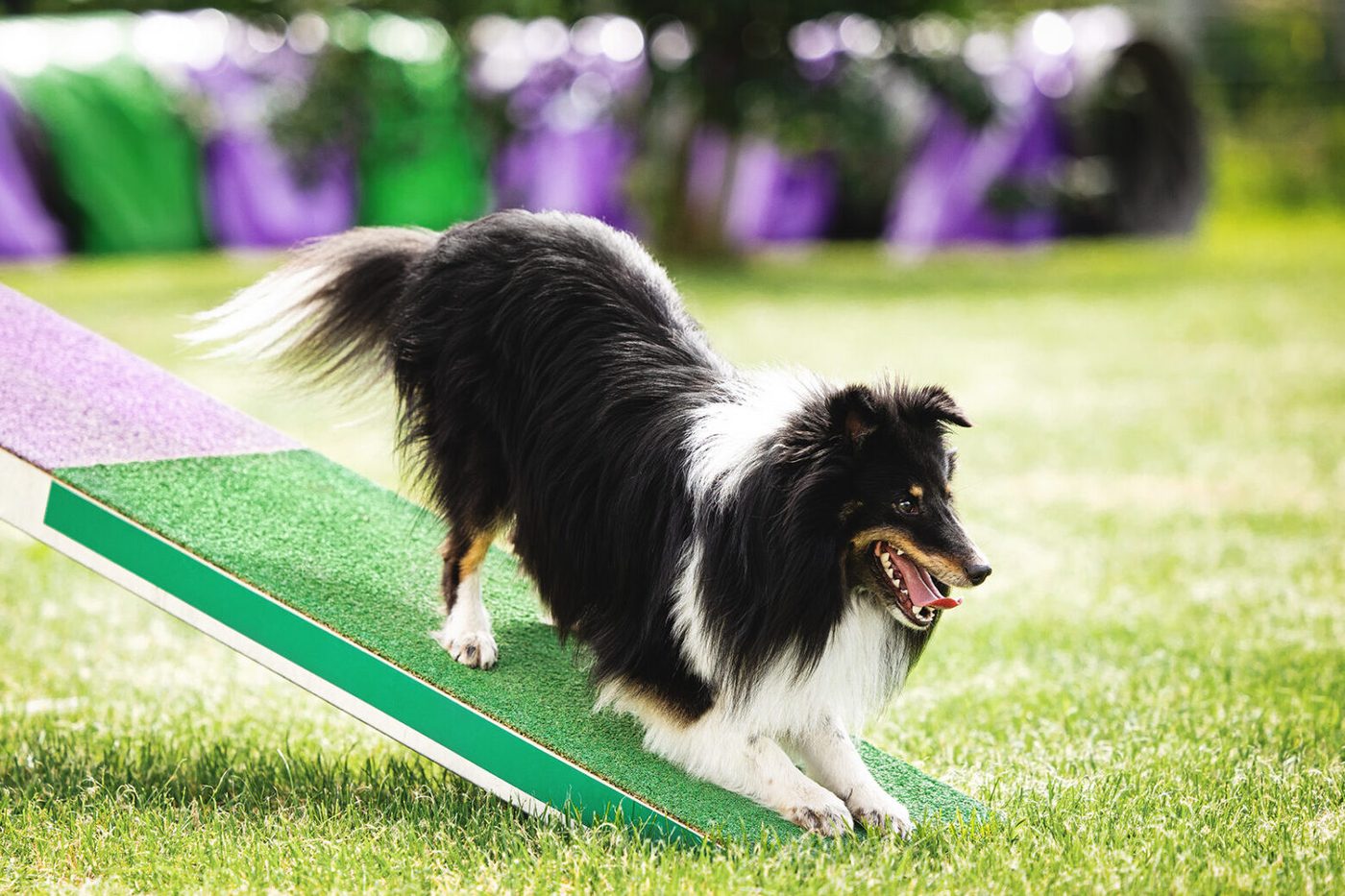
Without a clear end position, your dog won't reliably find the stopping point. It can turn into creeping before the desired spot is reached.
Missing end criteria let the behavior get watered down over time, or under pressure, which means exactly at competitions. Consistency suffers, and your dog becomes unsure how far it actually has to go to get rewarded. Uncertainty leads to frustration.
Teach your dog a clear end position, and show it how to shift its weight so it keeps its balance on the seesaw. Then it knows exactly where to stop. No more guessing.
Depending on what suits the two of you, go with 2on2off or 4on. With 2on2off, the back paws are on the obstacle and the front paws in front of it. With 4on, all four paws are on it. Built correctly, both give your dog confidence.
And that confidence has a direct effect on speed and reliability. A dog that knows exactly where and how to stop can run faster.
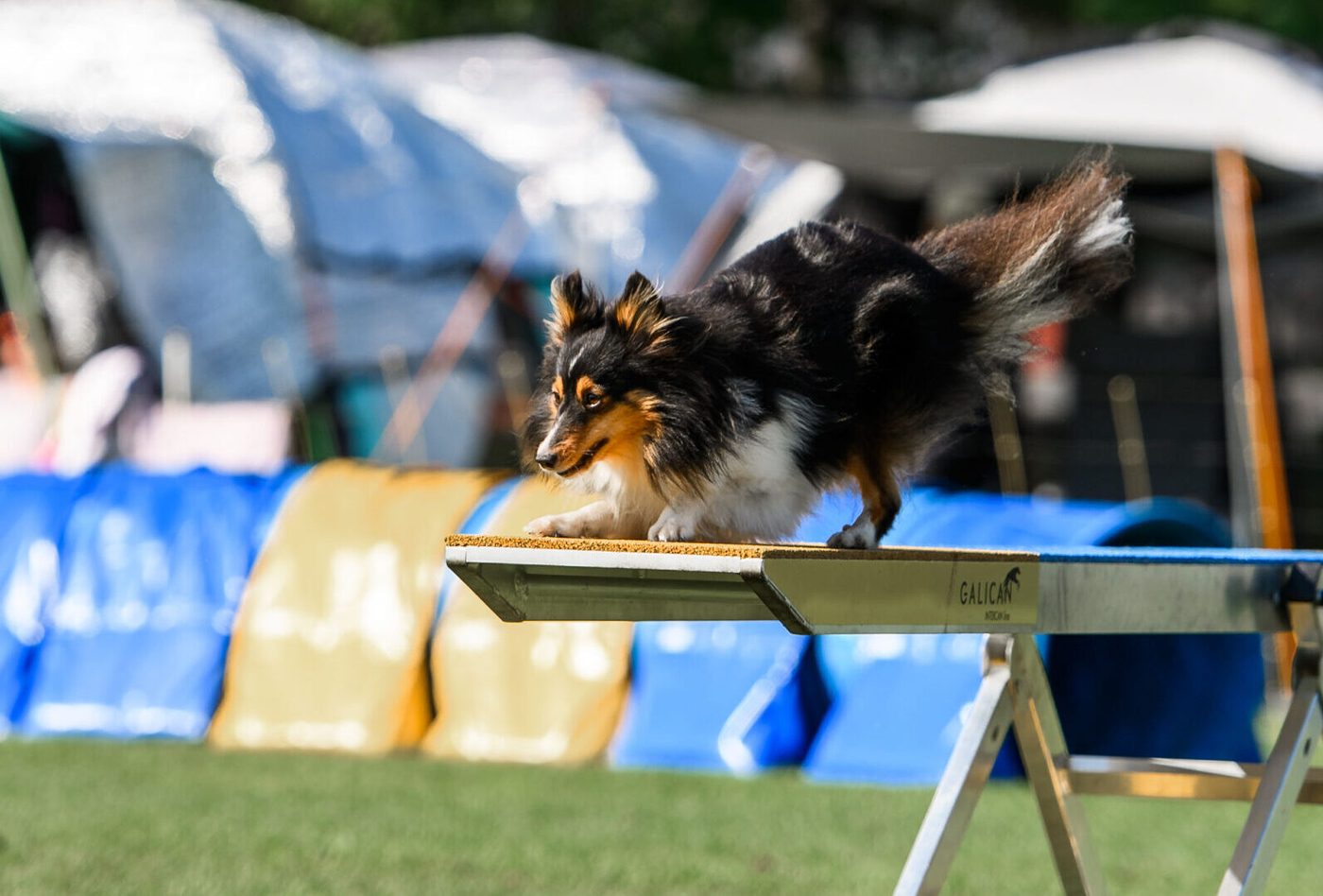
If you train on the seesaw before about twelve months of age, you're risking your dog's joint health. In young dogs, the joints aren't fully developed yet. Training too intensively can cause lasting damage.
On top of that, the ability to keep balance isn't fully developed yet either. That can lead to accidents that cause harm both mentally and physically.
And even at the right age, rushing things will come back to bite you. If your dog gets startled by the seesaw suddenly dropping, it can develop a fear that's hard to overcome.
You can give your young dog a head start with balance and coordination games. Invest time in basic behaviors and tricks first. That lays the groundwork.
And explain the reward markers to your dog. They're like a secret language: They tell your dog which reward to expect and where to find it.
Once your dog is old enough, you learn the basics on the ground first. You don't need any equipment for that. The better this phase is established, the faster things go on the seesaw later.
If you're not sure whether your dog is ready for the next step: Do one more session at the height it's comfortable with. Its confidence always comes first.
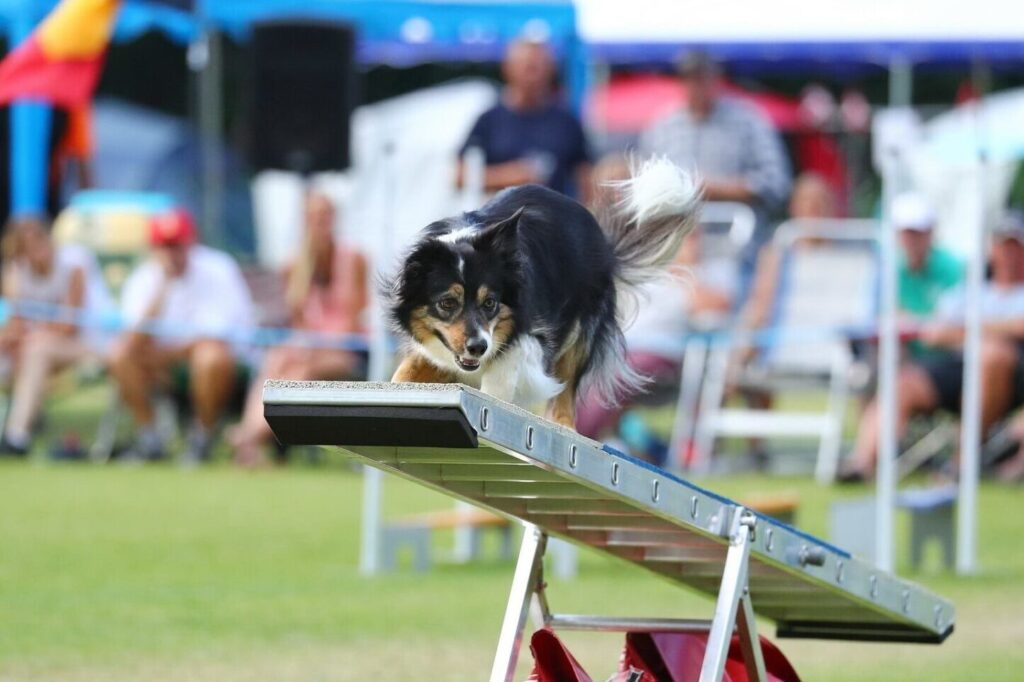
You hold the seesaw and move it manually while your dog is standing on it. From your dog's point of view, the movement is unpredictable.
We mean well and want to help. But the seesaw doesn't behave the way your dog expects. This inconsistency is confusing and can feel threatening.
The result: Your dog connects the seesaw with that feeling and avoids it.
Leave your dog in control, always. It seems like a small thing, but it makes a big difference.
If you want to support the seesaw, use a stable setup, not your hand. This isn't just a question of safety, but of trust: Your dog has to be sure that nothing will suddenly slip away. Check the stability before every session.
A note if your dog already knows the seesaw: If it has a clear expectation, a seesaw that reacts differently is more likely to confuse it. In that case, skip this step and focus on running down the board.
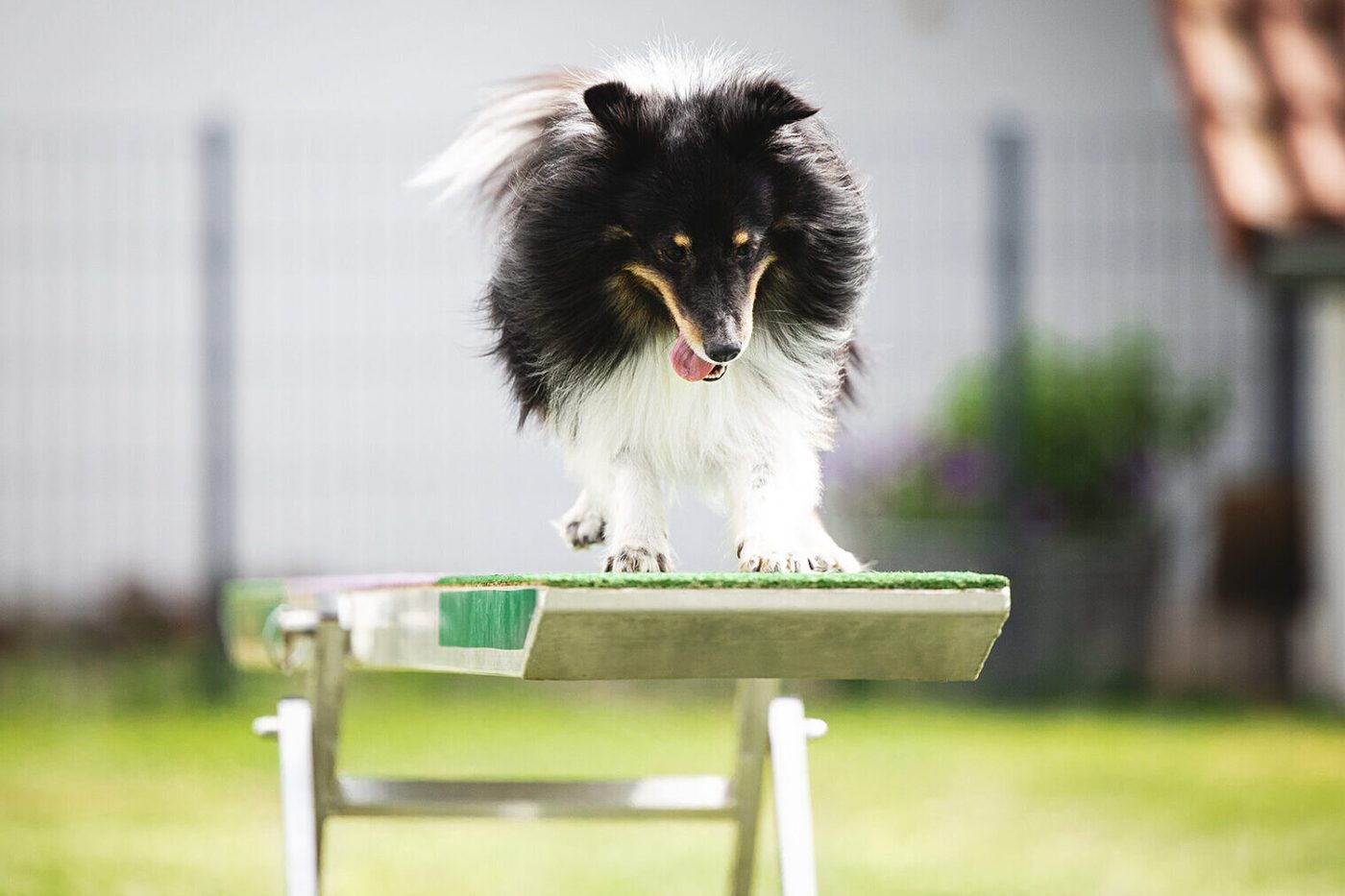
I see this scenario a lot: “Of course my dog knows how to do the seesaw.” And before you know it, your dog has jumped off and refuses to get back on.
The assumption behind it: If your dog knows one seesaw, it can do all of them. But every seesaw is a little different, and the environment plays a big role.
Just because it works in training doesn't mean it works under the pressure of a competition. Nerves and adrenaline have a strong influence on behavior.
In a new environment or on a new seesaw model, it's completely fine to go back a few steps. That way your dog can adjust.
Seeing a new model for the first time at a competition isn't a good idea for an inexperienced dog. Train on it beforehand so your dog gets to know the tipping point.
You can also prepare your dog by gradually increasing the pressure in training: handler movement, other dogs nearby. That way it learns to cope before everything comes at once at a competition.
Especially in your first competitions, avoid putting too much pressure on the seesaw, to prevent fly-offs. Too much pressure leads to confusion with the dogwalk. Safe performance comes first, not speed.
If you want to build the seesaw step by step, you'll find a structured guide in the course “Bang It”.
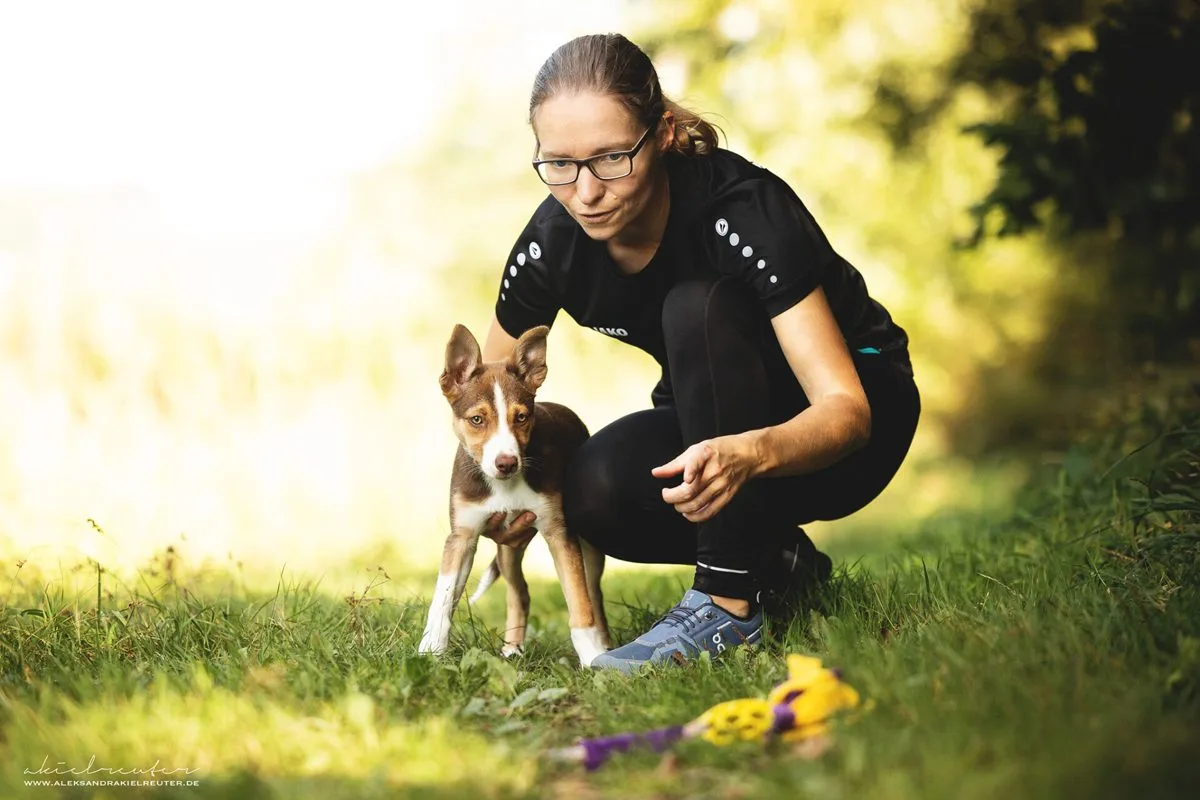
I have been running agility for 23 years and have been passing on my knowledge to other teams for 16 years. I studied psychology and e-learning, which is why my articles don't just explain what, but also why.
More about me →In the course library you will find the right training plan step by step, with video instructions and real corrections.