Your dog takes the obstacle that's farther away, even when you run past a closer one. From food bowls all the way to a world championship sequence.
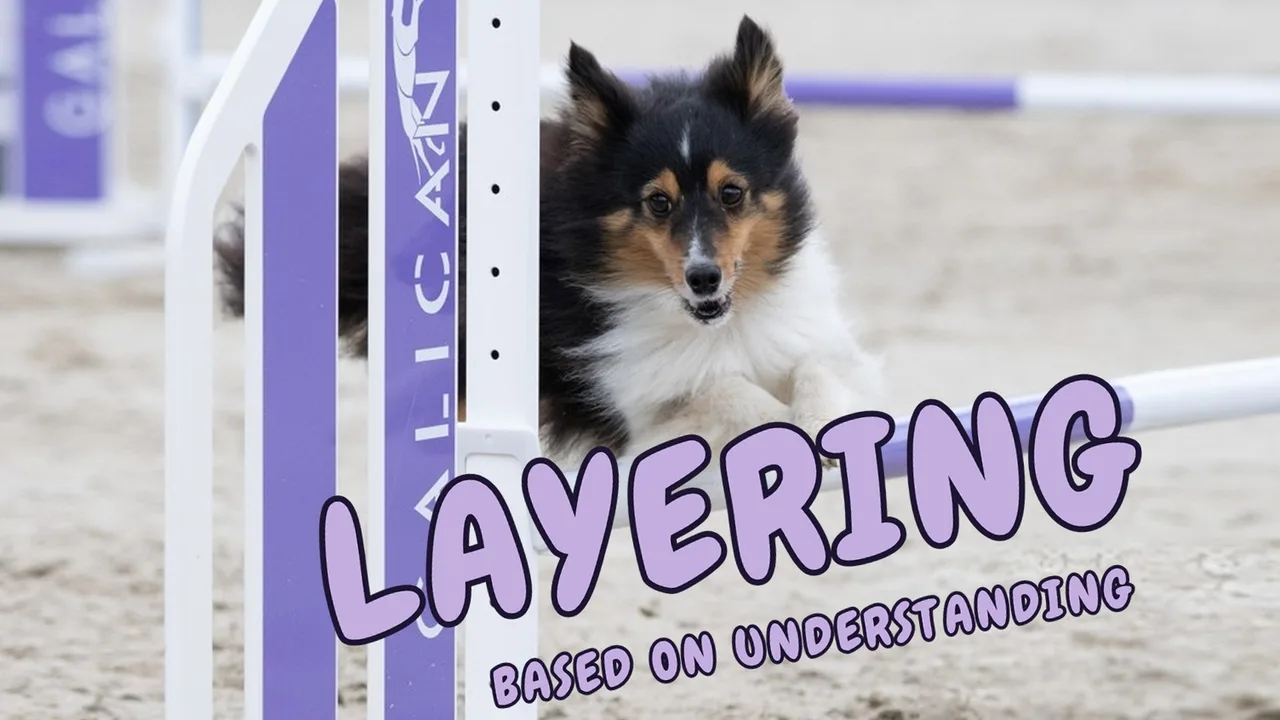
Layering means your dog takes the obstacle that's farther away from you, even though you're running past a closer one. You stay on your line, your dog finds its own.
For that, we build a layering cue. It tells your dog to skip an obstacle or to change its line away from you. It always comes together with the cue for the next obstacle, for example seek plus your jump cue or seek plus tunnel. That way your dog also knows what to do once it gets there.
You start with simple games with food bowls and toys. Then you add motion, a jump and tunnels, and later common layering setups. At the end you test everything in sequences like the ones run at international championships.
You'll also learn when your dog actually needs the cue. Often the obstacle cue is enough. How often your dog needs the layering cue depends on whether it's more obstacle-focused or handler-focused, and on its size.
Vorher und nachher
A look inside the course
6 lessons with two parts each, plus a theory video: foundations, adding motion, adding a jump, layering with tunnels, common layering setups, and testing in sequences.
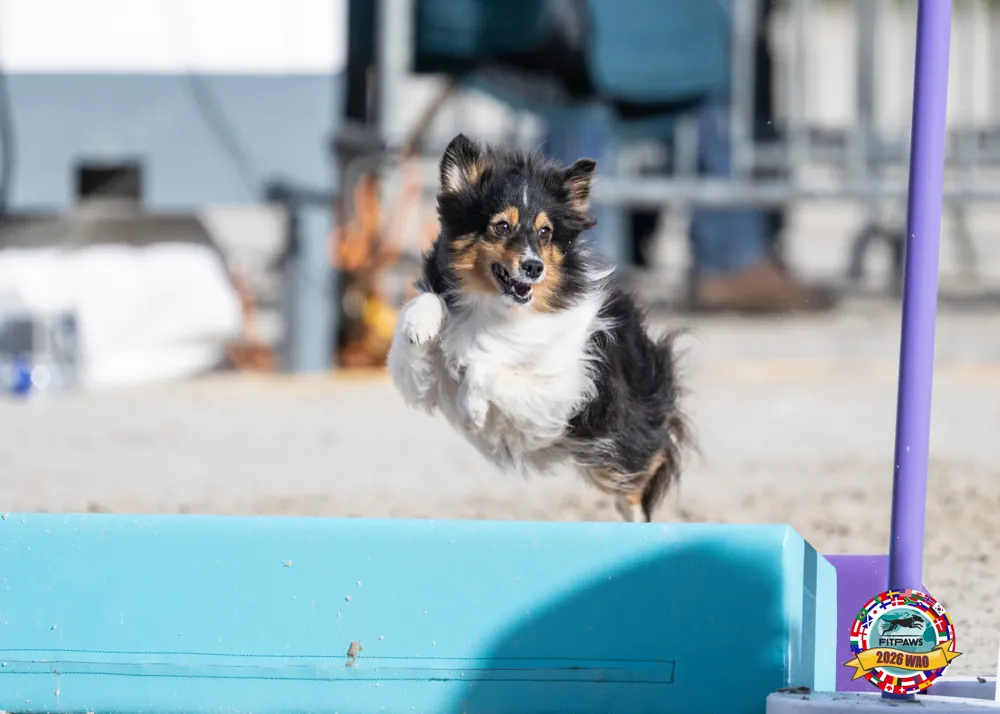

Smaller dogs take more strides and don't land on the right line as easily. They often need the layering cue earlier than big dogs.
If your dog doesn't have reliable obstacle focus and a focus cue yet, or can't perform its obstacle and jump cues independently yet. That's the foundation for this course.
If you're just starting to compete. You don't need layering in the lower levels yet, and early on your dog shouldn't learn to run around obstacles.

Kundenstimme

Spar-Tipp
-
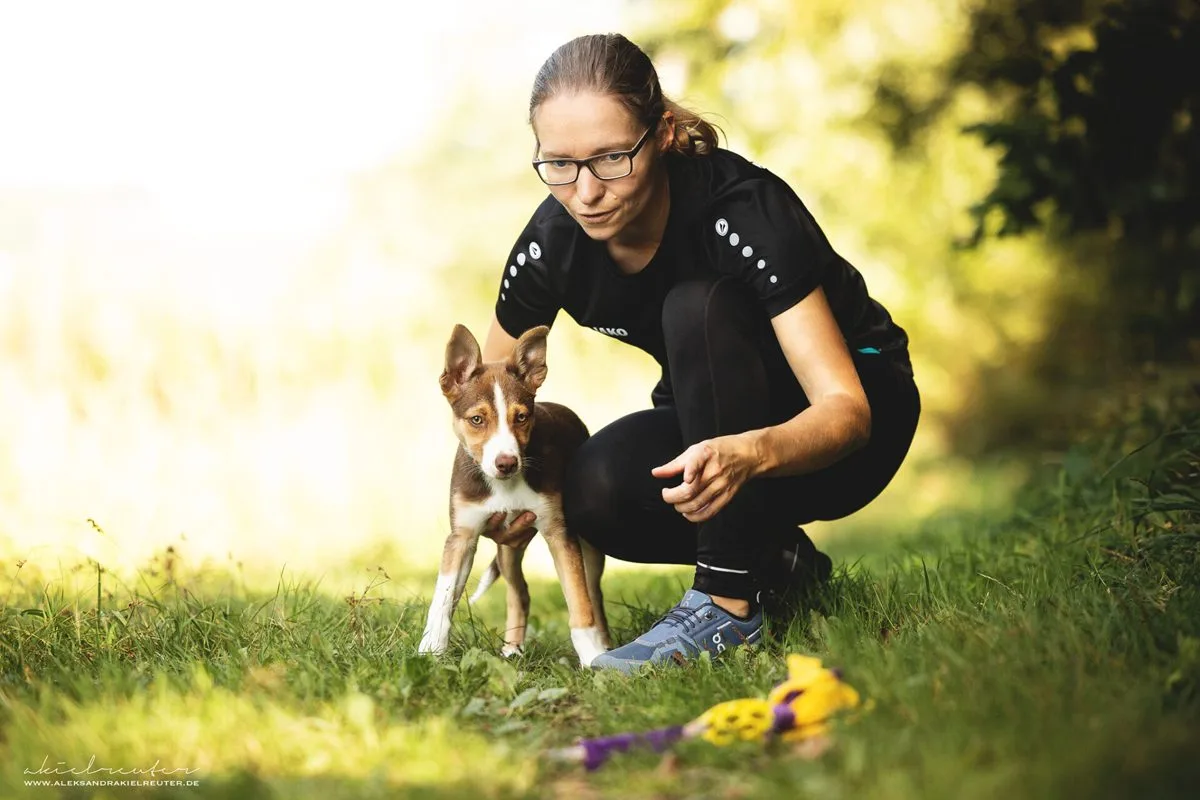
I have been doing agility for 23 years and have won 13 medals at the World Agility Open and the European Open. Agility Campus has been around for 10 years. In my courses your dog learns to understand what it is doing. Repetition alone is not enough for me.
More about me →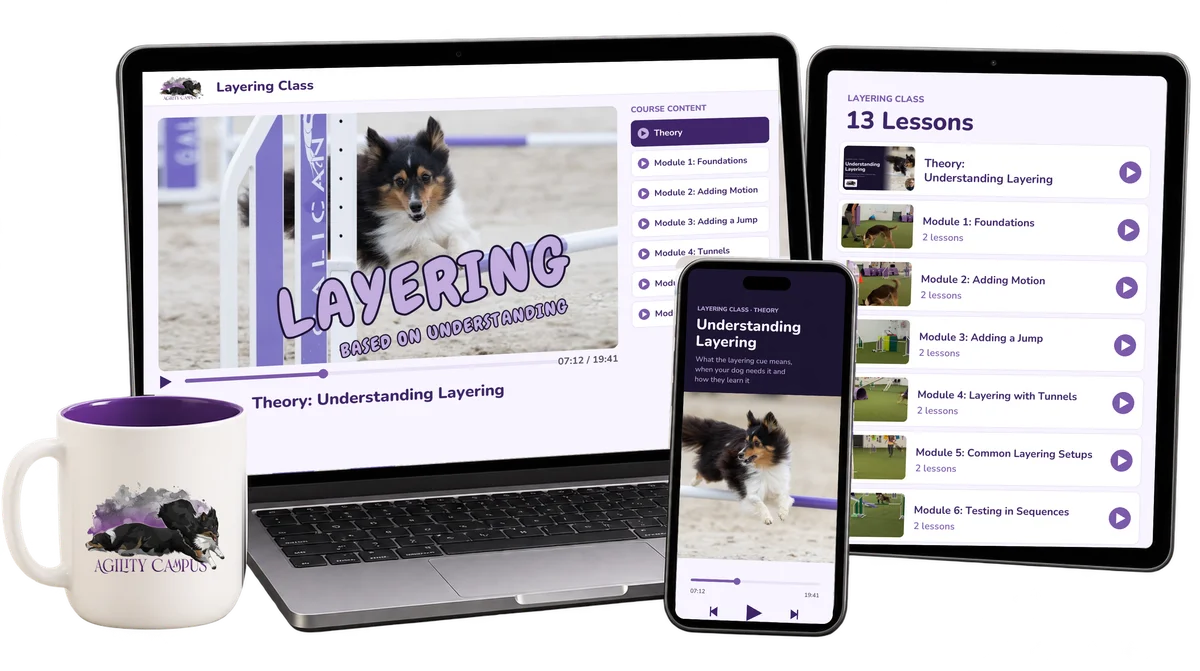
You start right away and train for twelve months at your own pace.
Still not sure? Find out which course is right for you and your dog on Start here →
Right after your purchase. Your login details come by email.
12 months to all content.
Yes, the course is included in the community.
Go to the community →Physically, the course is fine from 12 months. But I recommend starting later. I always teach layering only once a dog is competing at the highest level (A3 in Germany). You don't need the skill in the lower levels yet, and early on your dog shouldn't learn to run around obstacles. With advanced dogs you can start earlier.
Obstacle focus, a focus cue, and a solid understanding of the obstacle and jump cues it should perform after layering, also at a distance. If a cue is already shaky up close, build that first. You build obstacle focus in the course Obstacle Focus & Distance.
No. Obstacle-focused dogs often find the right line on their own. For them it's about understanding when to layer and when to take the closer obstacle. Handler-focused dogs tend to come back to you and need the cue more often. The exercises are the same for all dogs.
Two food bowls and a cone to start with. Later you'll need up to 3 jumps and up to 2 tunnels. A remote treat dispenser helps.
Yes, the layering course is included in the Agility Campus Community.